Pashmina


Pashmina Story

Made from the fur of pashmina, a mountain goat that scales the snow-capped mountains of Nepal, India and Tibet, these shawls for centuries have been cherished as an investment, tradition, and even art form in South Asia.
The true pashmina is made of wool from the neck and underbelly of the capra hircus, a goat that thrives only in arid Himalayan plateaus at 12,000 to 14,000 feet. The high altitude, combined with the goat's Spartan diet and special genetic makeup, enable it to grow a coat of wool among the finest and warmest on earth.
Americans are only just starting to get hooked - but they're catching the craze fast. In December, Vogue magazine deemed the pashmina shawl "fashion's cult accessory of the moment."
For centuries, silk has often been woven with pashmina to give shawls a harder finish, strength and greater body. With the advent of the 1990s silk/pashmina shawl, however, new treatment processes have been added to obtain the objectives of extraordinary softness and fluffiness. These are achieved largely by brushing the freshly loomed shawls both before and after dyeing. The result is a luxurious and light feeling fabric, which still manages to achieve the ancient pashmina standard of providing amazing warmth to its wearer.
Pashmina and Silk/Pashmina shawls are hand woven by men as only they have the strength to throw the shuttle back and forth continuously. Prior to weaving, the pashmina wool is carded and spun by women. As the entire process is almost entirely done by hand, there are small flaws and slubs that make their way into virtually every shawl. This is normal and should be seen as a sign that the fabric has been hand loomed. Dyeing is also done by hand. The undyed shawls are stirred, again by men, into large pots of simmering dye liquid. Periodically they are lifted out to be inspected. When the desired color is achieved, the shawls are rinsed, dried and treated. Because the entire dyeing process is, again, done by hand, some slight striations can be expected. Finishes can also differ because dyes have different effects on the /Silk/Pashmina fabric. This explains why some light colored shawls feel softer than other dark colored ones. If they are from the same weaver, the only difference is from the effects of the dye.
Pashmina shawls can be delicately hand-washed in cold water with a light detergent such as Woolite. They should be rolled in towels to remove excess water and laid to dry. To remove wrinkles, pashmina shawls should be either steam pressed or lightly ironed under a pressing cloth. Silk/Pashmina shawls should be dry-cleaned. Although the contents are natural products, the silk and raised pap of the fabric cause Silk/Pashmina shawls to wrinkle more easily. Because home pressing can flatten the nap, it is best to have Silk/Pashmina professionally dry cleaned.

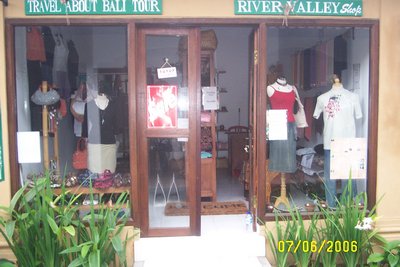
River Valley Shop, Ubud - Bali


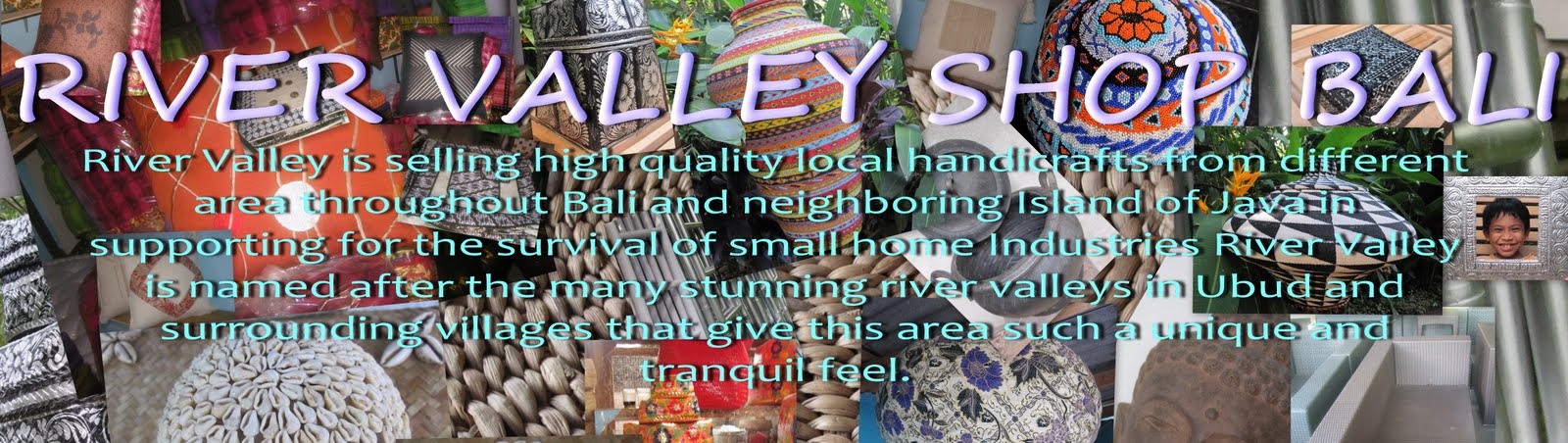
River Valley is named after the many stunning river valleys in Ubud and surrounding villages that give this area such a unique and tranquil feel.

River Valley is a new shop soon to open in Ubud, our shop will be a Bali based booking office for Travel About Bali tours and also sell high quality men’s and ladies clothing and accessories.


Our new store is a joint venture between Wayan Sueta from Taman Village,west of Ubud and Julie and Mark Church from Perth in Western Australia. The three of us have been working together since 2003 with Travel About Bali tours and now have expanded our business to include a retail outlet.

Bali did an amazing job of recovering from the October 2002 bombings, tourism slumped following this terrible tragedy and many families who replied on tourists for their income suffered very hard times. By September 2005 the tourists were back in force and inbound numbers were at their highest peak ever. These good times were not destined to continue; on the 1st of October 2005 another series of tragic bombings rocked the island. Once again sadness descended over Bali .We mourned for the families who had lost their loved ones and also mourned for our lively hoods that once again were taken away from us. To add to the blow on the same day as the bombings the fuel subsidies were abolished and the price of fuel doubled overnight.

We know it will be sometime before tourism is back to its peak and many local people will find it difficult to look after their families until then .Rather than let these new challenges defeat us we decided to increase rather than downsize our investment in Bali.

After much discussion and research the decision was made to open a shop in Ubud and use as much local labour and craftsmen as possible to make stock for the shop. All of our furniture was made in Taman village by Wayan’s uncle and Gusti using timber from the area. Our clothing is made by a tailor in Ubud and our T shirts made locally in Seminyak. The beading for our T shirts is done by the ladies from Taman village from beads purchased locally in Denpasar and Ubud. The woolen shawls, pashmina clips and some jewelry is also made in Bali as are our environmentally friendly paper bags to take home your purchases in.

Were possible we use local Balinese leather and labour to make our belts and handbags, other items in the range are brought in from Java and Jakarta.
Our shop is staffed by two ladies from Ubud and the building leased from a Balinese businessman based in Ubud. We offer wall space to local artists to display their work on a commission basis and will also hire out mountain bikes from the shop for people to enjoy to beauty of Ubud at their own pace.

With tourist numbers down so low ourselves and many others like us can not rely entirely on our specialized tours for income. By opening our shop we hope the whole community will benefit. We have carefully selected clothing and shoes to accommodate western sizing with small, medium and large available for both men and women. As Ayu our tailor lives in Ubud clothes can be altered or made to order should you require a non standard size. In the future we will also offer an on line ordering service so as you can make your selection from our range and we will send the items to you. River Valley is an exciting new venture for us and we welcome you to visit us at our shop.

The shop is located in the centre of Monkey Forrest road opposite Ulluwattu lace. Come in and see us soon.